

We zijn voortrekkers van wetenschappelijke innovaties die je de beste dermatologische oplossingen bieden met de best verdragen ingrediënten.


-
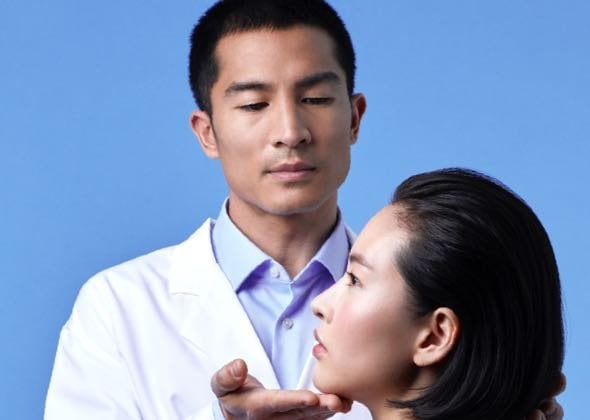
SPOTSCAN
-
-
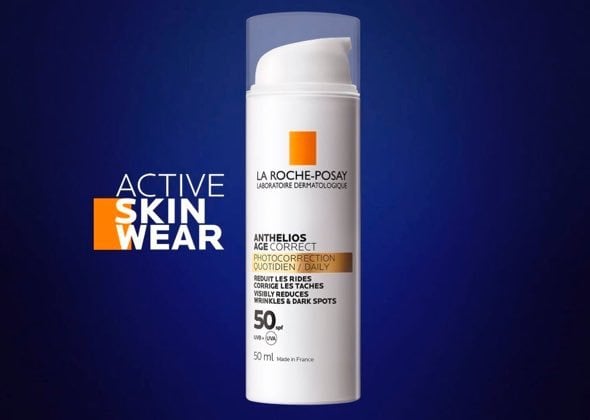
MEER DAN HUIDVERZORGING
MEER DAN ZONNEBESCHERMING
ANTHELIOS AGE CORRECT SPF5O -
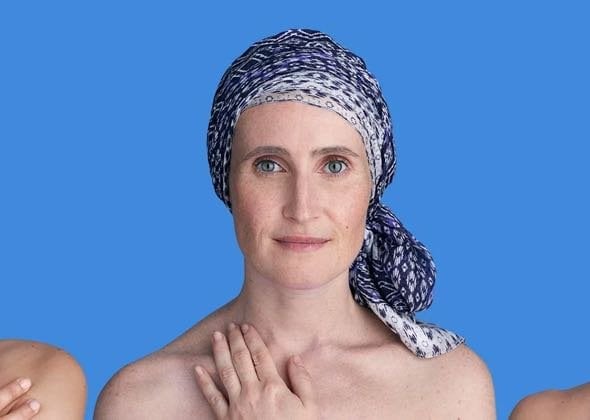
EEN BETER HUID
TIJDENS KANKER
Samen kunnen we aan een mooiere toekomst bouwen
-
ECZEMA ACADEMY
-
SHOP NU
WHY IS LA ROCHE-POSAY
INVESTING IN MARINE LIFE RESEARCH?
ANTHELIOS MORE
RESPECTFUL OF MARINE LIFE
At l’Oréal we have always been committed to safety; Safety for your skin, but also safety for the world we live in. Climate change affects us all, and this effects are very visible in our oceans: Rising sea levels, corals bleaching, and species extinctions are real issues to be addressed. That’s why for the last 20 years loreal has invested and partnered with key research centers in missions to understand more about marine life, and how we can better respect our oceans.
rising sea levels, corals bleaching, and species extinctions are real issues to be addressed. That’s why for the last 20 years l’Oréal has invested in and partnered with key research centers in missions to understand more about marine life, and how we can better respect our oceans.
All scientific evidence shows that global warming, is the number one cause of coral bleaching, and there are some local factors that can lead to the deterioration of these reefs. Contamination from urban and industrial pollutants, poor land field management leading to the run-off of agricultural soils leading to sediments, fertilizers, and pesticides, making their way into the marine environment. In addition, overfishing and water acidification are aggravating factors as well.
In collaboration with the Centre Scientifique de Monaco, we have co-developed a new methodology to evaluate whether UV filters and other ingredients of sunscreens may have effects on coral bleaching. We have exposed cultural corals livings to concentrations of UV filters up to several thousand times higher than the concentration found in the ocean, and we have monitored these corals 24hours 7 for 5 weeks to watch for any signs of bleaching. At l’Oréal we have long been committed to make our sunscreens as respectful as possible of marine life, and aquatic life in general. That’s why we are involved in a journey to assess each and every sunscreen formula in this new and complete environmental testing platform.
If we take l’Oréal’s main sunscreen care brand La Roche-Posay, we have tested most of Anthelios products following these protocols and so far, all of them proved to be respectful of marine life. We plan of having all the other products tested by the end of 2022.These evaluations on corals are just one of the different trials that we put our formulas and ingredients through.
With all our safety protocols, l’Oréal standards are extremely high, what we do goes well above the legal or regulatory requirements in the cosmetics industry.
The regulatory standard is mainly on filters, and most of the time on fresh organisms only. At l’Oréal we test our full formulas with 7 different methods using both fresh and salt water organisms.
Being open, transparent, and accountable is key if we are going to care for our planet. We have published a joint paper with the Centre Scientifique de Monaco to share this new protocol for testing on corals, and we do that with a rigorous and reliable test platform.
LA ROCHE-POSAY EVALUATED
EACH AND EVERY FACE & BODY FORMULAS
La Roche-Posay evaluated each and every face & body formulas on planktonic species representative of aquatic and marine biodiversity. At La Roche Posay we test our formulas in fresh water with standard tests. We go beyond mandatory tests in salt water with further tests.

FRESH WATER
STANDARD
TEST
STANDARD
TEST
STANDARD
TESTS
ZOOPLANKTON |DAPHNIA MAGNA
No impact on survival
MICRO-ALGAE |SELENESTRUM
No impact on growth
FISH EGGS |DANIO RERIO
No impact on life
TESTS
ZOOPLANKTON |DAPHNIA MAGNA
No impact on survival
MICRO-ALGAE |SELENESTRUM
No impact on growth
FISH EGGS |DANIO RERIO
No impact on life
SALT WATER
FURTHER TESTS
FURTHER TESTS
FURTHER
TESTS
BACTERIA | VIBRIO FISHERI
No impact on luminescence
CULTURED CORALS | STYLOPHORA PISTILLATA
No impact on photosynthesis
No coral bleaching
TESTS
BACTERIA | VIBRIO FISHERI
No impact on luminescence
CULTURED CORALS | STYLOPHORA PISTILLATA
No impact on photosynthesis
No coral bleaching
Safety for your skin
and the environment
and the environment
At La Roche Posay, we are always committed to safety.
Safety for your skin.
Safety for the environment.
We go beyond mandatory tests.
We test our fourmulas* with 7 different methods in fresh water and salt water.
Safety for your skin.
Safety for the environment.
We go beyond mandatory tests.
We test our fourmulas* with 7 different methods in fresh water and salt water.